
Bee control in Chester County, PA, is a common concern every spring and summer. Knowing whether removal or relocation is the right choice can save homeowners time, money, and stress. This article covers the key differences, explains which species call for which approach, and outlines when to call a licensed pest control professional versus a local beekeeper.
What Is the Difference Between Bee Removal and Bee Relocation?
Removal is a broad term for physically addressing a bee colony on your property. It may or may not mean the bees survive. Relocation means a living colony is captured and transferred to a managed hive or apiary where it can continue to thrive. The right approach depends on the species, the nest location, and the risk level for your household.
Bee control serving Exton, PA, and surrounding Chester County communities requires identifying the species before any action is taken. What looks like a honey bee colony could be yellow jackets, and the two require completely different responses.
Which Bee Species Can Be Relocated, and Which Cannot?
Honey Bees
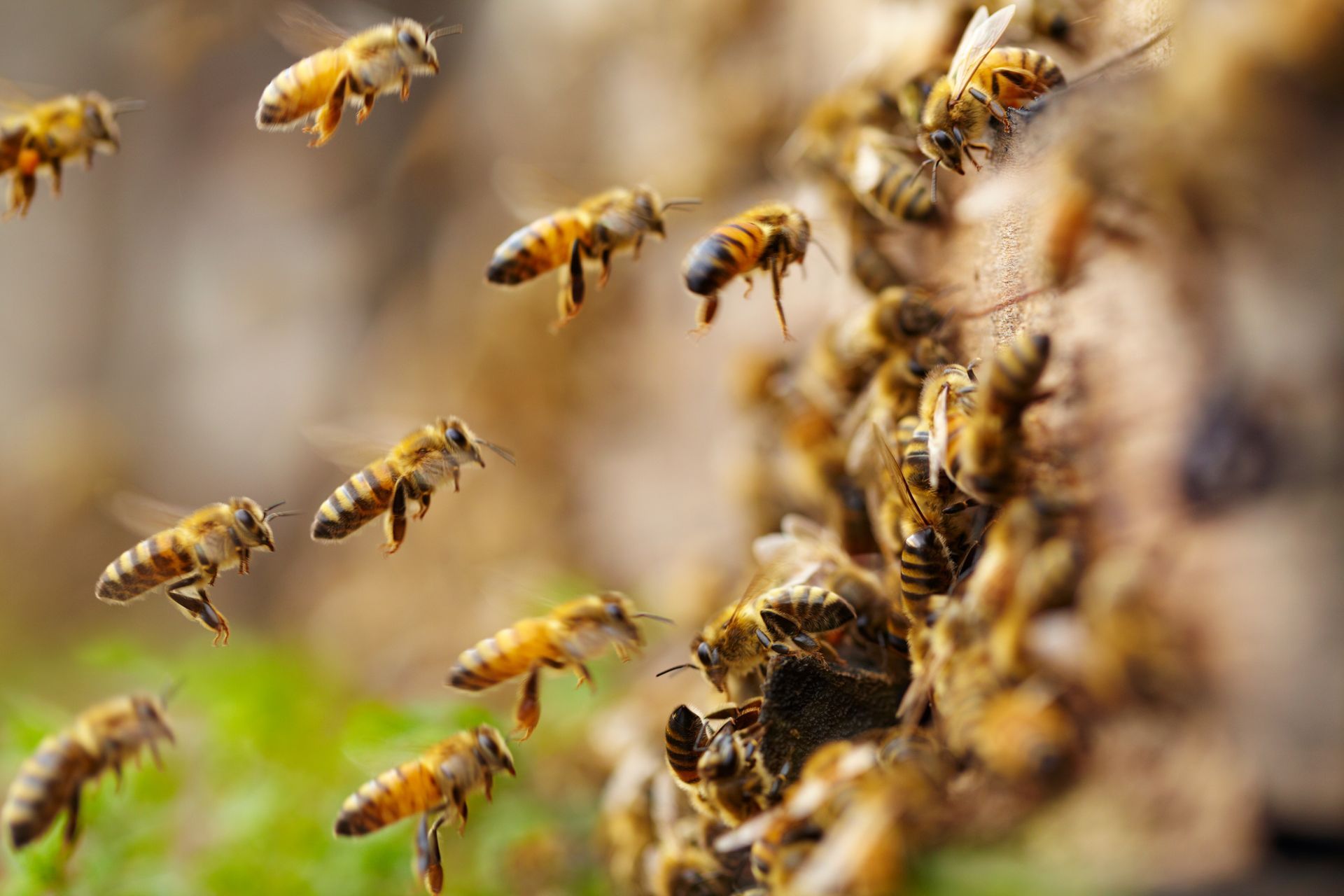
Honey bees are the most likely candidates for relocation. A healthy colony can often be transferred to a local beekeeper's apiary. If a swarm is hanging from a tree branch or fence post, it may be a good candidate for live relocation. However, if the colony has moved into a wall void, soffit, or chimney, the situation becomes more complicated. Extracting a structural hive means opening building materials, removing comb, cleaning the cavity, and sealing entry points. Leaving abandoned honeycomb inside a wall can attract rodents, ants, and future swarms.
Pennsylvania's Bee Law, administered by the Department of Agriculture's Bureau of Plant Industry, regulates the movement of honey bees across the state. The Chester County Beekeepers Association may connect homeowners with a beekeeper willing to collect an accessible swarm, but beekeepers typically handle exposed swarms, not structural infestations.
Bumble Bees
Bumble bees are important pollinators and generally not aggressive unless disturbed. They nest underground, under slabs, or in debris piles. Relocation is rarely practical. If a nest poses a direct safety risk near a doorway or play area, a licensed pest control professional can treat it safely.
Carpenter Bees
Carpenter bees are solitary insects that bore into soft wood such as fascia boards, deck railings, and window trim, causing real structural damage over time. There is nothing to relocate. The appropriate response is to treat the entry holes, prevent new drilling, and seal the wood with paint. A pest control professional may recommend insecticidal dust treatments for active galleries.
Yellow Jackets
Yellow jackets are wasps, not bees, though many Chester County homeowners treat them the same. They are far more aggressive and can sting repeatedly. Relocation is not an option. Their nests are most often found underground, in wall voids, and under decking. Treatment should always be handled by a licensed professional, especially in late summer when colonies peak in size and aggression.
When Should You Call a Beekeeper Instead of a Pest Control Company?
A beekeeper may be the right first call when you have a confirmed honey bee swarm in an accessible outdoor location that is not yet inside a structure and is not posing an immediate safety risk.
A licensed pest control company is the better call when the nest is inside a wall or structural void, the species has not been confirmed, the colony is large and established, or someone on the property has a bee-sting allergy. Pest control professionals can accurately identify the species, assess the scope, and apply targeted treatments that address both the colony and the conditions that attracted it.
Can Honey Bees Be Legally Killed in Pennsylvania?
There is no Pennsylvania law that prohibits a licensed pest control company from treating honey bees. Some misinformation suggests they are federally protected, but this is not accurate. Pennsylvania's Bee Law applies to beekeepers and apiaries, not to pest control of feral colonies on private property.
What Happens If I Leave a Bee Nest Untreated?
Abandoned honeycomb can melt in summer heat, staining walls and attracting ants, rodents, and beetles. The scent of an old nest may also draw a new swarm to the same location the following spring. Bee control for structural infestations should always include comb removal and cavity sealing to prevent this cycle from repeating.
How Do I Know If I Have Bees or Yellow Jackets?
Yellow jackets have a smooth, hairless body with bright yellow and black banding and a narrow waist. Honey bees are fuzzier and rounder with more muted coloring. If insects are flying in and out of a hole in the ground near your Exton, PA, lawn, yellow jackets are the more likely culprit.
Is Spring or Summer Worse for Bee Problems in Chester County?
Spring is typically when swarms are most common, as honey bee colonies split and scout new nesting sites. Carpenter bees also become active in spring. Yellow jackets build toward peak colony size through midsummer and into fall. Chester County homeowners see the widest variety of stinging insect activity from April through September. Scheduling a bee control inspection early in the season can help identify nesting activity before colonies become large and harder to manage.
Get Professional Bee Control Serving Exton, PA
Whether you are dealing with a honey bee swarm near Exton, carpenter bees boring into your deck, or yellow jackets nesting in your lawn, the right response starts with correct identification.
Modern Exterminating & Termite Control Co. has served Chester County homeowners for over 70 years and offers targeted bee and wasp control services for a wide range of stinging insects. Their technicians can identify the species, locate the nest, and recommend an appropriate treatment plan.
To get started, contact the team or call (610) 586-5525 to request an assessment. You can also read reviews by visiting Modern Exterminating & Termite Control Co. on Google.